
For millions of taxpayers, income tax refunds are more than just a routine payment from the government. They often play a crucial role in household budgeting, debt repayment, savings, and major purchases. As the 2026 tax season approaches, understanding how the IRS income tax refund schedule works becomes essential. Knowing when you can file your return, how long refunds usually take, and what factors may cause delays can help you plan ahead and avoid unnecessary stress. The 2026 refund timeline follows a structured process, but individual circumstances can influence when your money actually arrives.
The Role of the IRS in the 2026 Tax Season
The responsibility for managing tax returns and issuing refunds lies with the Internal Revenue Service, commonly known as the IRS. Each year, the agency prepares for tax season by updating systems, issuing guidance, and setting official filing dates. In 2026, the IRS continues its efforts to improve processing speed, accuracy, and security while handling millions of tax returns. Understanding how the IRS operates during tax season helps taxpayers set realistic expectations for refund timing.

When the 2026 Tax Filing Season Officially Begins
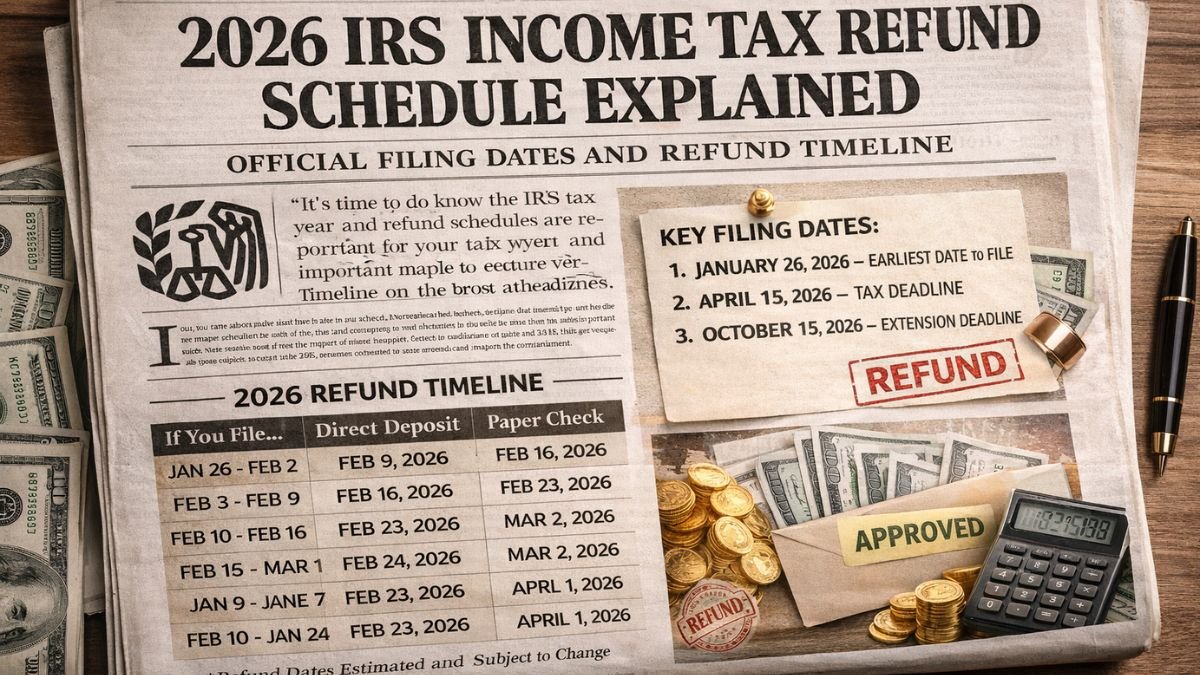
The 2026 tax filing season officially begins when the IRS starts accepting federal income tax returns. This typically occurs in late January, although the exact date is announced closer to the start of the season. From that point forward, taxpayers can submit their returns electronically or by mail. Filing as early as possible is often recommended, especially for those expecting a refund, as early filing generally leads to faster processing. However, early filing does not guarantee an immediate refund, as returns must still pass verification and review checks.
Key Tax Filing Deadlines in 2026
The most important date for taxpayers is the federal tax filing deadline, which usually falls in mid-April. This deadline applies to most individual taxpayers who are required to file a return or pay any taxes owed. Filing by the deadline helps avoid penalties and interest. For those who need more time, filing an extension allows additional months to submit the return, though any taxes owed must still be paid by the original deadline. Refunds for extended returns are processed after the IRS receives and reviews the completed filing.
How the IRS Refund Process Works
Once a tax return is submitted, the IRS begins processing it through a series of automated and manual checks. This process includes verifying income information, confirming credits and deductions, and checking for errors or inconsistencies. If everything is accurate, the return moves smoothly toward approval. Refunds are then scheduled for payment through direct deposit or paper check, depending on the method selected by the taxpayer. The majority of refunds are issued within a standard processing window, but some returns require additional review.
Expected Refund Timeline for 2026
For taxpayers who file electronically and choose direct deposit, refunds are typically issued within about three weeks from the date the return is accepted. This timeline reflects the fastest possible scenario and applies to returns without errors or special circumstances. Paper-filed returns usually take longer to process, often several weeks more, due to manual handling. While the IRS provides general timelines, actual refund dates can vary depending on workload, system updates, and individual return details.
Direct Deposit vs. Paper Check Refunds
The method you choose to receive your refund plays a significant role in how quickly you receive your money. Direct deposit is the fastest and most secure option, allowing funds to be transferred directly into a bank account. Paper checks, while still available, require additional processing and mailing time. In 2026, the IRS continues to encourage electronic filing and direct deposit to reduce delays and minimize the risk of lost or stolen checks. Taxpayers who prioritize speed typically choose electronic methods.
Factors That Can Delay Your 2026 Tax Refund
Several factors can slow down the refund process. Errors on the tax return, missing information, or mismatched income data can trigger manual reviews. Claims for certain tax credits, such as refundable credits, may also require additional verification. Identity verification issues and suspected fraud can further delay refunds as the IRS works to protect taxpayers. While these checks are designed for security, they can extend the waiting period beyond the standard timeline.
Refund Timing for Tax Credits and Special Cases
Taxpayers claiming specific credits may experience longer refund timelines. These credits are often subject to additional scrutiny to ensure accuracy and prevent fraud. As a result, refunds involving these credits are sometimes issued later in the tax season. While this can be frustrating, these measures help maintain the integrity of the tax system. Planning for a possible delay can help taxpayers manage expectations and finances more effectively.
Tracking Your 2026 Tax Refund Status
The IRS provides tools that allow taxpayers to track the status of their refund after filing. Once a return is accepted, refund status updates become available within a few days for electronic filers and later for paper filers. These tools show whether the return is being processed, approved, or if the refund has been sent. Checking your refund status can provide reassurance and help identify issues early if delays occur.
The Impact of Filing Early vs. Filing Late
Filing early in the tax season often results in faster refunds, especially for those with straightforward returns. Early filing also reduces the risk of identity theft, as criminals have fewer opportunities to file fraudulent returns using stolen information. Filing later in the season, especially close to the deadline, may result in longer processing times due to higher IRS workload. While filing early does not guarantee immediate payment, it generally improves the chances of a quicker refund.
Refunds for Amended and Corrected Returns
If a taxpayer needs to amend a previously filed return, the refund timeline changes significantly. Amended returns require manual processing and can take several months to complete. In 2026, the IRS continues to work on reducing these delays, but amended refunds remain slower than original filings. Taxpayers should only file amendments when necessary and be prepared for a longer wait.
Common Myths About IRS Refund Dates
Many taxpayers believe that refunds are issued on fixed dates or according to a strict schedule. In reality, refund timing depends on when the return is filed, how it is submitted, and whether it requires additional review. Another common misconception is that calling the IRS can speed up a refund. In most cases, contacting the IRS does not accelerate processing unless there is a specific issue that needs resolution.
Planning Your Finances Around the 2026 Refund Timeline
Understanding the refund timeline allows taxpayers to plan more effectively. Rather than relying on a specific date, it is wise to treat the refund as arriving within a general window. Using the refund to pay down debt, build savings, or cover essential expenses can provide financial relief. Careful planning helps avoid dependence on a refund for urgent financial needs.
How Technology Is Improving Refund Processing
In recent years, the IRS has invested in modernizing its systems, and 2026 continues this trend. Improved digital tools, enhanced fraud detection, and expanded electronic services aim to speed up processing and reduce errors. While challenges remain, these improvements contribute to a more efficient tax season and faster refunds for many taxpayers.

What to Do If Your Refund Is Delayed
If your refund takes longer than expected, the first step is to check its status using official IRS tools. In many cases, delays resolve on their own as processing continues. If the delay extends significantly or additional information is requested, responding promptly can help move the process forward. Staying informed and patient is key when dealing with refund delays.
Final Thoughts on the 2026 IRS Income Tax Refund Schedule
The 2026 IRS income tax refund schedule follows a structured but flexible timeline influenced by filing methods, accuracy, and individual circumstances. By understanding official filing dates, expected processing times, and potential delays, taxpayers can navigate tax season with greater confidence. Filing electronically, choosing direct deposit, and submitting accurate information remain the best strategies for receiving refunds as quickly as possible. With proper preparation and realistic expectations, the 2026 tax season can be smoother and less stressful for everyone.