
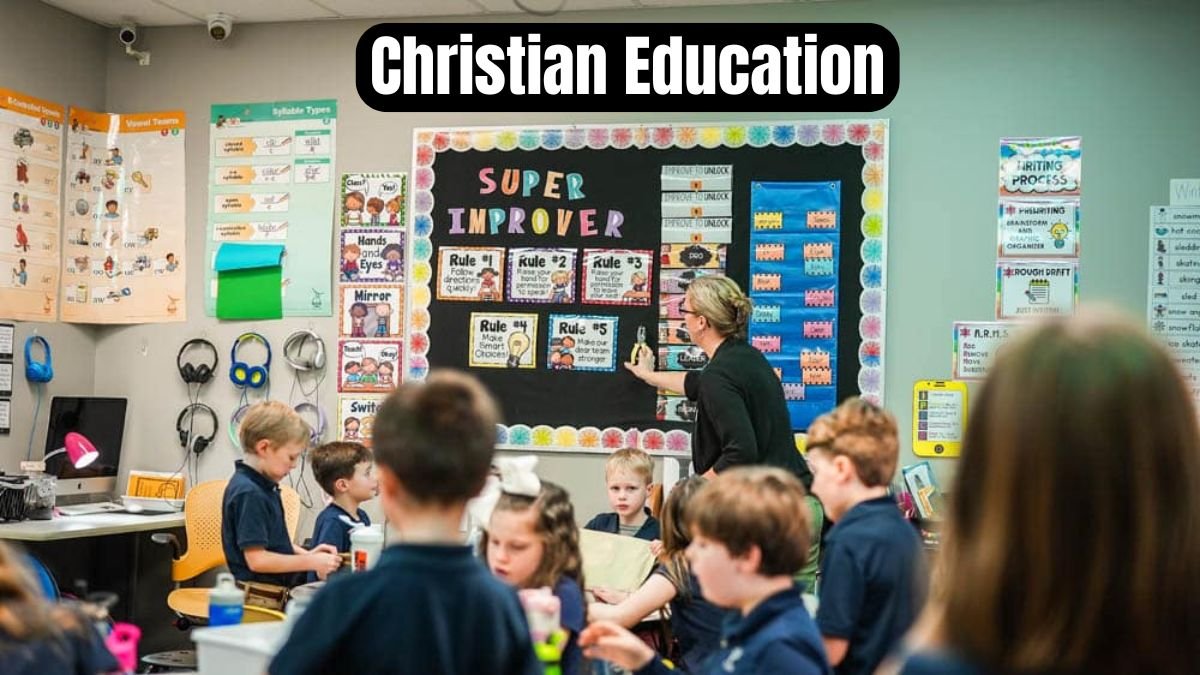
Education is not limited to book knowledge and vocational skills. It is also a means of shaping our character, thinking abilities, and life values. In this context, Christian education is a unique type of education that guides the lives of children and young people based on the teachings of the Bible and Christian values. Christian education is not limited to religious instruction; it also emphasizes holistic personality development, ethics, and social responsibility.
The primary objective of Christian education is not only to provide students with academic knowledge but also to give them a perspective that can provide moral and spiritual guidance in every challenge of life. This education system emphasizes developing faith in God, the value of truth, and compassion for humanity through the teachings of the Bible. Understanding this is crucial because, in today’s world, education is no longer limited to simply getting a job; it also provides the ability to think, make decisions, and choose the right path.
The Importance of a Biblical Worldview
When we view any subject from a biblical perspective, the foundation of our understanding and value system becomes stable and unwavering. This is called a biblical worldview. This perspective provides children with balance and clarity in various aspects of life—such as family, society, nature, and self-identity. Adopting a biblical worldview in school not only makes students academically strong but also encourages them to prioritize ethics and integrity in their decisions.
A biblical worldview teaches that all human beings are equal in God’s eyes. It inspires children to embrace human qualities such as empathy, forgiveness, and cooperation. When these values are integrated with education, students become responsible not only for themselves but also for society and the community.
Moral and Spiritual Development in Christian Education
The greatest benefit of Christian education is that it fosters moral and spiritual development in children. While traditional education often limits itself to subjects like mathematics, science, or language, Christian schools also teach children how their knowledge can be used for the betterment of society and others. For example, biblical narratives—such as stories of compassion, honesty, and sacrifice—lay the foundation for moral decision-making in students’ lives. They understand that the difference between right and wrong is not limited to rules or laws, but is also reflected in their character and critical thinking abilities. Furthermore, prayer, Bible study, and group activities cultivate patience, self-control, and discipline in children.
Academic Excellence and Christian Education
Many people believe that Christian education is limited solely to religious instruction. This perception is incorrect. In reality, this educational system also emphasizes academic excellence. The science, mathematics, language, and arts curricula in these schools are modern and progressive, but they are taught with a values-based approach.
This approach means that students not only learn facts and information, but they also develop the ability to solve problems in a moral and responsible manner. For example, in a science project, children are not only taught how to conduct experiments, but also how their research and findings can benefit society. In this way, education and values go hand in hand.
Personal Development and Self-Confidence
Another important aspect of Christian education is personal development and self-confidence. Biblical teachings help children understand that they are precious and valuable in God’s eyes. This boosts their self-esteem and confidence. When students value themselves, they make decisions with patience and courage, even in challenging situations.
In addition, Christian schools provide students with opportunities to develop leadership and service qualities. Group projects, service work, and community service experiences teach children that success is not only about personal gain, but also about contributing to society and the community.
Positive Contribution to Society
The ultimate goal of Christian education is to bring about positive change in society. When students are morally and spiritually empowered, they spread values of honesty, empathy, and responsibility in society. They become not only good employees or professionals, but also good citizens, good friends, and responsible family members. In today’s rapidly changing world, where a decline in moral values is observed, Christian education teaches children that truth, justice, and service should always be prioritized in life. This education not only imparts knowledge but also equips them with the ability to approach every decision in life with patience, wisdom, and faith.
Conclusion
In short, Christian education is not merely an academic system. It is a holistic educational approach that shapes children’s character, values, and moral outlook. By adopting a biblical worldview in school, students not only excel academically but also become strong morally, spiritually, and socially.
Christian education reminds us that the true purpose of education is not simply to secure a job or a place in society. Its real purpose is to embody the values of humanity, service, and truth in our lives and to spread them throughout society. When children grow up with these values, they not only achieve success in their own lives but also bring about positive change in society and the world.
Therefore, if you desire for your children not just academic knowledge but also a strong moral and spiritual foundation, Christian education is an option that provides stability and direction in every aspect of their lives.