
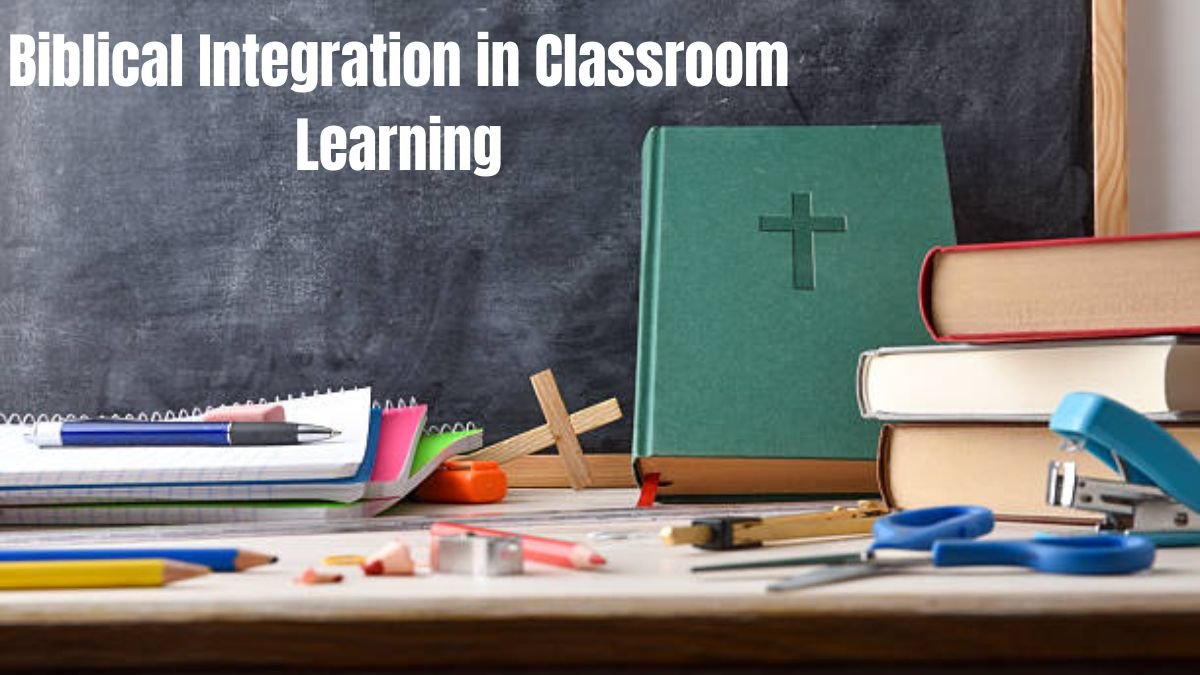
In today’s educational landscape, simply imparting knowledge is not enough. Children need to be not only academically competent but also possess strong character, moral values, and a sound life perspective. In this context, the importance of Biblical integration in the classroom increases. This is not limited to religious education; it contributes to the holistic development of children—physically, mentally, and spiritually.
Biblical integration in the teaching process ensures that students don’t just memorize facts and theories, but learn to use their knowledge in morally and socially responsible ways. This approach provides children with a stable value system, enabling them to distinguish between right and wrong in life and maintain ethical principles in their decisions.
What is Biblical Integration?
Biblical integration in the classroom means connecting academic subjects with biblical principles and teachings. The goal is to help children understand that knowledge is not limited to information; it also encompasses moral and spiritual development. For example, instead of simply teaching experiments and facts in a science lesson, it can also be taught how this knowledge can be used responsibly for the environment and society. Similarly, while teaching literature or history, students can understand how the values taught in the Bible—honesty, compassion, and justice—apply to real life.
Biblical integration helps children develop a virtuous and value-based perspective. It teaches them that life’s challenges should be faced not only with intelligence but also with moral and spiritual understanding.
Academic Benefits
Biblical integration in the classroom is not limited to spiritual education. It also enhances children’s academic performance. When students understand that their knowledge is not just for exam scores, but also for the betterment of society and humanity, their approach to learning changes.
For example, in math and science classes, students are not only taught to find solutions but also how their conclusions are socially and morally significant. Similarly, in history and social studies, students develop moral and social decision-making abilities through biblical narratives. In this way, biblical integration connects education and values.
Moral and Character Development
The greatest benefit of integrating the Bible into the classroom is that it aids in the character and moral development of children. Biblical stories and teachings—such as compassion, honesty, forgiveness, and service—shape students’ personalities and behavior.
Children are taught that success is not limited to academic or personal achievements, but that its true value lies in virtue, morality, and the well-being of others. When these values are integrated with education, students become responsible not only for themselves but also for society and the community.
Spiritual and Mental Development
Biblical integration also helps in the spiritual and mental development of students. It helps them understand that they are valued and precious in God’s eyes. This sense of self-esteem and self-worth enables children to face life’s difficult situations with patience, composure, and faith.
Regular prayer, Bible study, and group activities cultivate qualities such as patience, self-control, and empathy in children. These qualities not only help them in their personal lives but also bring about positive changes in their academic and social behavior.
Social Responsibility and Service
Integrating the Bible into the classroom also teaches students the importance of social responsibility and service. Children are taught that their knowledge and skills should be used not only for themselves but also for the betterment of society and the community.
Group projects and service activities give children the experience that success in life is not limited to personal gain. This perspective motivates them to become empowered, responsible, and ethical citizens.
Preparation for Real Life
Biblical integration prepares students for the real challenges of life. It helps them understand that knowledge is only valuable when it is used in a moral and just manner. Children are also taught that making the right decisions in life is not only a matter of intelligence, but also depends on their beliefs and value system.
This approach enables students to become not only academically competent but also to achieve stability, balance, and success in their social and personal lives. They are able to face life’s challenges with patience, integrity, and a positive attitude.
Conclusion
In summary, the integration of the Bible in the classroom not only enhances children’s academic knowledge but also plays a crucial role in their character development, morality, and spiritual growth. This approach teaches students that the purpose of education is not merely to acquire knowledge, but also to use it for virtue, service, and the betterment of society.
Through Bible integration, children develop patience, honesty, cooperation, and the ability to make ethical decisions in their lives. This not only makes them stronger individuals but also prepares them to make positive contributions to society and their community.
Thus, integrating the Bible into the classroom is an approach that combines academic excellence, morality, and spiritual development, making children’s lives more complete and empowering them.
