
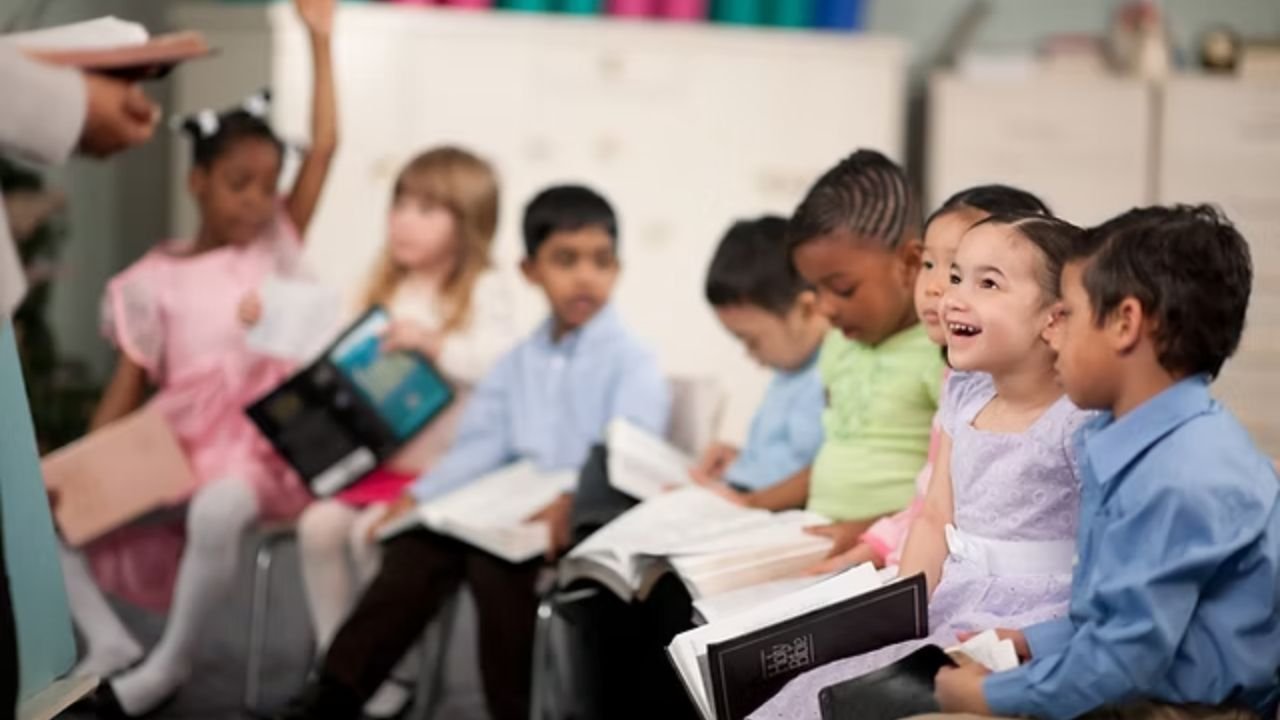
Parents often wonder if there is a significant difference between the curriculum of Christian schools and that of general or secular schools. The short and clear answer is—yes, absolutely. When a parent chooses a Christian school for their child, they are not only choosing a good academic education but also embracing values and principles that will guide their child throughout life. Christian education aims not only to impart knowledge from books but also to explain how this knowledge connects to God’s word and the broader purpose of life. Because of this approach, the curriculum of Christian schools is considered more holistic and balanced, where education, ethics, values, and critical thinking develop together.
Christian Curriculum Based on God’s Word
The most prominent feature of the Christian school curriculum is that its central focus is God’s word. Whether the subject is mathematics, science, art, or humanities—every subject is taught in the light of God’s creation and truth. Children are not only taught formulas, definitions, or facts, but also how all this knowledge is part of the creation of an almighty Creator. In this way, education ceases to be merely a collection of information and becomes a profound means of understanding life and the world. The Christian curriculum instills the belief that truth is one and is contained in the message of the Bible, providing children with a strong and stable foundation for their thinking.
Value Formation Alongside Education
Secular education often focuses more on academic success, while Christian education aims at character building alongside knowledge acquisition. The curriculum of Christian schools places special emphasis on developing morality, honesty, compassion, love, and a spirit of service in children. The teachings of Jesus Christ are integrated into every subject and activity in such a way that children not only excel in their studies but also become good human beings. The relationship between teacher and student is also based on love, respect, and understanding. Thus, Christian education provides children with a moral compass that teaches them to distinguish between right and wrong and inspires them to make positive contributions to society.
Fostering Critical Thinking and Self-Reflection
A common misconception is that religious education only teaches dogma and does not allow for freedom of inquiry, but an excellent Christian school completely dispels this notion. The Christian curriculum doesn’t just tell children what to believe, but also teaches them why they believe it. Critical thinking is encouraged so that students can analyze facts, ask questions, and embrace their faith with understanding. This skill is essential in every aspect of life, as it makes children independent, discerning, and responsible citizens. Christian schools play a leading role in this, where faith and reason complement each other.
An Environment Filled with Grace, Compassion, and Love
Another important characteristic of Christian education is an environment based on grace and compassion. According to Christian principles, every person is worthy of love and respect, regardless of their background or religious beliefs. For this reason, Christian schools become a safe, supportive, and inspiring place for all students. Here, education is imparted not through fear or pressure, but through love and understanding. Children are given the opportunity to learn from their mistakes and are encouraged to become better people. Through the love and grace of Jesus Christ, students develop self-confidence, tolerance, and sensitivity towards others.
Conclusion: A Holistic and Purposeful Education
Ultimately, the difference between Christian and secular education is not limited to the curriculum, but is also reflected in the mindset and purpose. Christian education prepares children not just for a career, but for life. It teaches them a balance of knowledge, values, faith, and wisdom. Such students are not only academically competent but also morally and spiritually strong. This is why Christian schools offer a comprehensive, holistic, and purposeful education that guides children towards a better future and a better world.
