
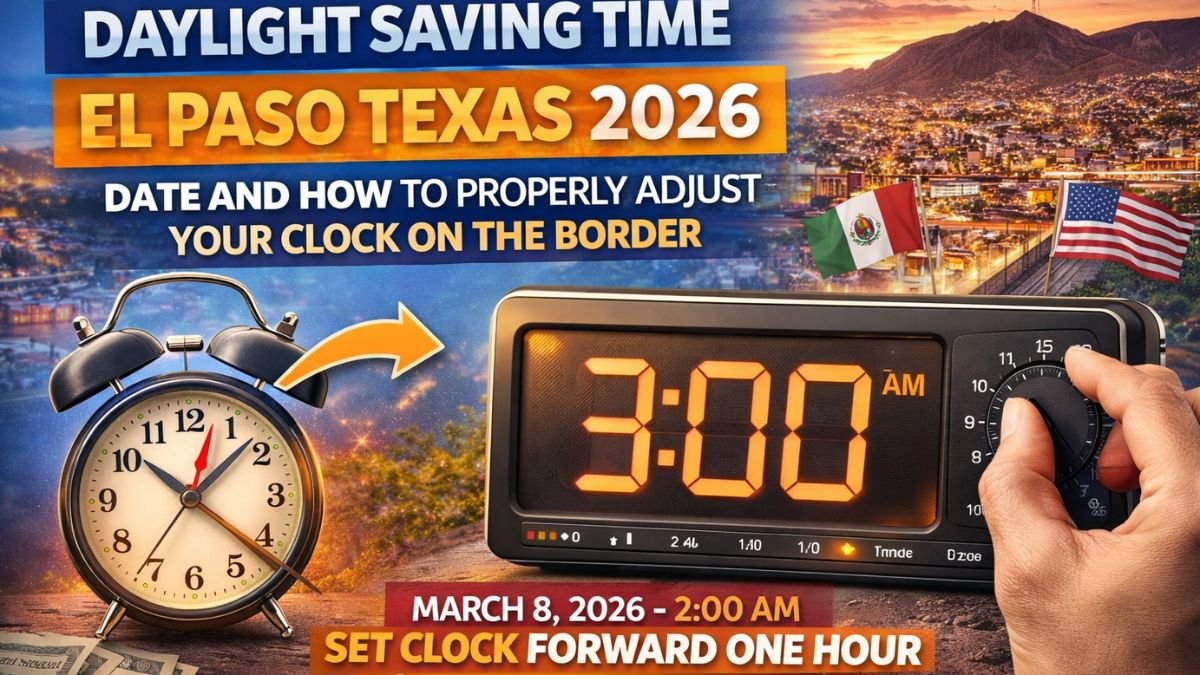
Daylight saving time is more than just a seasonal clock change, especially for a border city like El Paso. In 2026, residents, workers, students, and travelers must once again adjust their schedules as daylight saving time begins. Unlike many other cities, El Paso’s location on the U.S.–Mexico border adds an extra layer of complexity. Daily life here often involves crossing international boundaries, coordinating with different time zones, and managing work or family commitments on both sides of the border. Understanding the exact date of the time change and knowing how to adjust your clock properly can help avoid confusion, missed appointments, and unnecessary stress.
What Is Daylight Saving Time and Why It Exists
Daylight saving time is a system designed to make better use of natural daylight during the longer days of the year. By moving clocks forward one hour in the spring, evenings gain more daylight, while mornings become slightly darker. The idea behind daylight saving time dates back over a century and was originally promoted as a way to conserve energy and increase productivity. Although opinions about its effectiveness vary, daylight saving time remains in effect across most of the United States, including Texas, and continues to shape daily routines each year.

Daylight Saving Time Date in El Paso Texas for 2026
In 2026, daylight saving time in El Paso, Texas begins on Sunday, March 8. At exactly 2:00 a.m. local time, clocks move forward one hour to 3:00 a.m. This moment is often referred to as “spring forward,” as people effectively lose one hour of sleep but gain longer daylight in the evenings. The change applies to El Paso and most other parts of the United States that observe daylight saving time. From this date forward, El Paso will remain on daylight saving time until clocks fall back in early November 2026.
El Paso’s Time Zone and Its Importance
El Paso operates in the Mountain Time Zone, which already sets it apart from much of Texas that follows Central Time. During daylight saving time, El Paso switches from Mountain Standard Time to Mountain Daylight Time. This distinction is especially important for travelers, businesses, and remote workers who communicate across different regions. Being aware of the time zone change helps ensure smooth coordination with other cities in Texas and across the country.
The Border Factor: Why Time Changes Are More Complicated in El Paso
El Paso’s close connection with Ciudad Juárez makes daylight saving time more than a local issue. Thousands of people cross the border daily for work, school, shopping, and family reasons. While the United States and Mexico often observe daylight saving time, the dates do not always align perfectly. This difference can temporarily place El Paso and Ciudad Juárez in different time zones, even though they are neighboring cities. During these periods, a simple one-hour difference can impact work shifts, school schedules, medical appointments, and transportation.
How Daylight Saving Time Affects Cross-Border Travel
In 2026, travelers crossing between El Paso and Ciudad Juárez must pay close attention to time differences around the daylight saving transition. Border wait times, public transportation schedules, and business hours can be affected if one side of the border changes clocks before the other. Many residents rely on precise timing to manage their daily routines, and even a small misunderstanding can cause delays or missed commitments. Being proactive and confirming local times on both sides of the border is essential during this period.
How to Properly Adjust Your Clock in El Paso
Adjusting your clock for daylight saving time in El Paso is simple in theory but important to do correctly. On the night of Saturday, March 7, 2026, clocks should be set forward by one hour before going to bed. Most smartphones, computers, and digital devices update automatically, but analog clocks, watches, and some household appliances require manual adjustment. Ensuring that all clocks are synchronized helps maintain consistency in daily schedules and prevents confusion the following morning.
Preparing Your Daily Routine for the Time Change
The shift to daylight saving time can temporarily disrupt sleep patterns and daily routines. In El Paso, where many residents balance work and family obligations across the border, preparation is especially helpful. Gradually adjusting bedtime in the days leading up to the change can make the transition smoother. Planning morning routines, commute times, and appointments with the new time in mind reduces the impact of the lost hour and helps the body adapt more easily.
Impact on Work Schedules and Businesses
For businesses in El Paso, daylight saving time can influence operating hours, especially those that interact with partners or customers in other time zones. Employers may need to remind staff about the time change to avoid scheduling errors. Industries such as logistics, healthcare, and education are particularly sensitive to time differences. Clear communication and updated schedules help ensure that operations continue smoothly during the transition.
Schools and Universities Adjusting to Daylight Saving Time
Schools and universities in El Paso also adapt their schedules when daylight saving time begins. While class times remain the same on the clock, students and parents may feel the effects of darker mornings. Educators often emphasize punctuality during this period, and families may need to adjust morning routines to ensure students arrive on time. Awareness and preparation help minimize disruptions to academic schedules.
Health and Well-Being During the Time Change
The transition to daylight saving time can affect physical and mental well-being. Losing an hour of sleep may lead to temporary fatigue, reduced concentration, or mood changes. In El Paso, where many residents juggle demanding schedules, prioritizing rest becomes important. Maintaining a consistent sleep routine, staying hydrated, and getting exposure to natural daylight can help the body adjust more quickly to the new time.
Technology and Automatic Time Updates
Most modern technology automatically updates for daylight saving time, including smartphones, tablets, computers, and smart home devices. However, not all systems update correctly, especially older devices or manually configured equipment. In a border city like El Paso, verifying that devices reflect the correct local time is crucial. A mismatch of even one hour can cause missed alarms, incorrect meeting times, or travel delays.
Common Mistakes People Make During Daylight Saving Time
One common mistake is assuming all devices update automatically, which is not always the case. Another is forgetting about the border time difference, particularly when coordinating with contacts in Ciudad Juárez. Some people also overlook the impact on scheduled services such as deliveries or appointments. Taking a few minutes to double-check clocks and schedules can prevent these issues.
Why Daylight Saving Time Still Matters in 2026
Despite ongoing debates about whether daylight saving time should continue, it remains in effect in Texas in 2026. For El Paso, the time change continues to shape daily life, influencing everything from energy use to social activities. Longer daylight in the evenings encourages outdoor activities, supports local businesses, and enhances community events. Understanding the system allows residents to take full advantage of these benefits.
Planning Ahead for the End of Daylight Saving Time
While the focus in early 2026 is on the start of daylight saving time, it is also helpful to remember that the clocks will fall back later in the year. Planning ahead for both transitions creates a sense of routine and reduces confusion. Staying informed through official announcements and local news sources helps residents remain prepared throughout the year.
The Border Community and Shared Responsibility
In a unique border community like El Paso, adjusting to daylight saving time is a shared experience. Families, employers, schools, and service providers all play a role in ensuring a smooth transition. Open communication and awareness help maintain coordination across the border and strengthen the sense of community during seasonal changes.
Conclusion: Staying on Time in El Paso in 2026
Daylight saving time in El Paso, Texas in 2026 begins on March 8 and brings with it longer evenings and a shift in daily routines. For a border city deeply connected to life on both sides of the international line, understanding the time change is especially important. By knowing the exact date, adjusting clocks correctly, and planning ahead, residents can navigate the transition smoothly. Staying informed and prepared ensures that daylight saving time becomes an opportunity for better use of daylight rather than a source of confusion.
FAQs
1. When does daylight saving time start in El Paso, Texas in 2026?
It starts on Sunday, March 8, 2026, at 2:00 a.m., when clocks move forward one hour.
2. Does El Paso follow the same daylight saving time rules as the rest of Texas?
Yes, El Paso follows daylight saving time, but it is in the Mountain Time Zone.
3. Why is daylight saving time confusing in El Paso?
Because El Paso is a border city, time changes may not align with nearby Ciudad Juárez.
